
About the Course
Knowing the rules isn't enough. You need the infrastructure to enforce them. This course equips IT leaders, security teams, and clinical governance officers to implement Saudi Arabia's most advanced AI security architectures: sovereign cloud, confidential computing, prompt gateways, and continuous monitoring. Complete the series with a clear institutional roadmap toward MoH certification readiness. This is where policy meets infrastructure. The final course in the series moves from regulatory knowledge to operational security, covering the five-layer defense stack, PDPL-mandated incident response protocols, and the organizational controls that separate compliant institutions from certified ones. Walk away with a concrete action plan for your team, your facility, and your career.

Deploy a Five-Layer Security Stack
From sovereign infrastructure and confidential computing to network controls, audit provenance, and human oversight, implement a defense-in-depth model built for Saudi health AI. Go deeper than standard security, learn confidential computing enclaves, secure multi-party computation, and prompt sanitization gateways designed for healthcare AI.

Threat Model, Monitor, Red Team
Apply the intelligence-driven security framework: model threats before deployment, monitor continuously during use, and stress-test through adversarial red teaming. Establish administrative controls: role-based access, DPO dashboards, DPIA registries, incident response timelines, and vendor scorecards that make security sustainable.

Chart Your Institution's Next Steps
Build a concrete roadmap, from forming AI ethics committees and documenting architectures to preparing for MoH's Digital Health Certification. Translate the full course series into institutional action: individual micro-credentials, five-layer stack pilots with Aramco Digital, and alignment with the 10 Principles of Responsible AI.
Course Curriculum
-
1
Privacy & Security Controls Organizational safeguards
-
(Included in full purchase)
Introduction: From Compliance to Cyber-Physical Trust
-
(Included in full purchase)
STRIDE Thread Mapping for Healthcare Al
-
(Included in full purchase)
The Intelligence-Driven Security Framework
-
(Included in full purchase)
Advanced Technical Safeguards: Beyond Encryption
-
(Included in full purchase)
The Five-Layer Security Stack (Saudi Healthcare)
-
(Included in full purchase)
Conceptual Framework & Global Case
-
(Included in full purchase)
Secure Ecosystem for Saudi Healthcare
-
(Included in full purchase)
Administrative Safeguards: Building a Culture of Security
-
(Included in full purchase)
Global Lessons & The Saudi Advantage: Sovereign Infrastructure and Leadership
-
(Included in full purchase)
Policy Horizon: Emerging Regulatory Trends
-
(Included in full purchase)
Discussion & Implementation Tools
-
(Included in full purchase)
Section References & Further Reading
-
(Included in full purchase)
Assessment # 1
-
(Included in full purchase)
Assessment # 2
-
(Included in full purchase)
Open Response Discussion: What is the most common misconception about AI in our department?
-
(Included in full purchase)
-
2
Summary & Next Steps Reinforce key takeaways and institutional action
-
(Included in full purchase)
AI Use Register and Safe Prompt Library
-
(Included in full purchase)
Introduction: From Awareness to Action
-
(Included in full purchase)
Ten Principles for Responsible AI
-
(Included in full purchase)
Core Takeaways: The Ten Commandments of Responsible Al Use in Saudi Healthcare
-
(Included in full purchase)
Individual Next Steps: Building Your Al Competence
-
(Included in full purchase)
Building a Living Ethical Framework
-
(Included in full purchase)
Institutional Next Steps: Building a Culture of Responsible Al
-
(Included in full purchase)
The National Horizon: Saudi Arabia's Leadership Opportunity
-
(Included in full purchase)
Implementation Tools for Ethical AI Use
-
(Included in full purchase)
The Four Dimensions of Institutional Al Maturity
-
(Included in full purchase)
Global Lessons: Case Studies in Responsible Al
-
(Included in full purchase)
The Professional's Al Readiness Checklist
-
(Included in full purchase)
Final Reflection: The Human in the Loop
-
(Included in full purchase)
Discussion & Implementation Tools
-
(Included in full purchase)
Section References & Further Reading
-
(Included in full purchase)
Assessment # 3
-
(Included in full purchase)
Assessment # 4
-
(Included in full purchase)
Open Response Discussion: What would a “near-miss” AI incident look like in our department?
-
(Included in full purchase)
-
3
Zero-retention Sandbox Environment
-
(Included in full purchase)
AI Governance Sandbox Web Application
-
(Included in full purchase)
Meet Your Instructor
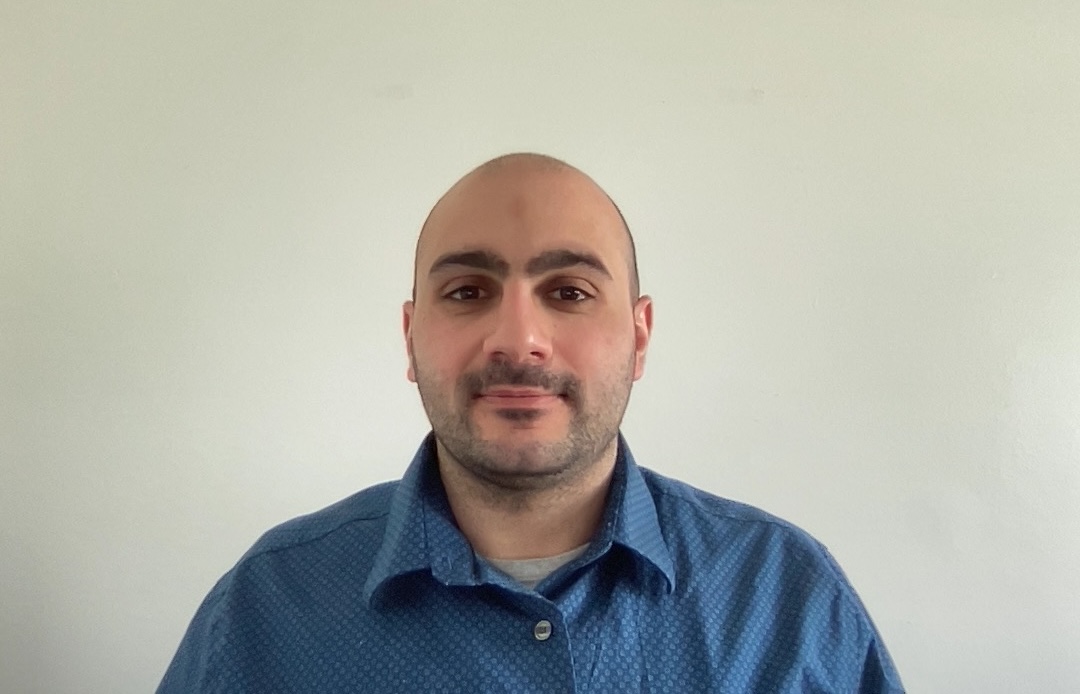
Dr. Ibrahim El-Chami is a researcher and technology entrepreneur with a PhD in sensors microfabrication for IoT and edge AI for sustainable smart city applications. He completed postdoctoral research at the University of British Columbia as a part of the Rogers-UBC smart 5G campus. Ibrahim advises governments on advancing responsible AI governance with a focus on agentic and embodied AI. He has authored AI governance frameworks for Canada, the EU, and other parts of the world, and developed responsible AI and AI safety curricula internationally. At UBC, Ibrahim collaborates with the DASH cluster on AI education initiatives for the Department of Medicine, contributing to curriculum design for DASH educational activities and events. He also supervises ECE students developing edge AI sensors for climate change monitoring and adaptation, supported by various NSERC Alliance grants. Ibrahim is a founding engineer at Agrobotic, Mostar Labs, and IoT-World with global project scopes, and has served as an AI consultant to the UN Food and Agriculture Organization. His work has been recognized with over 30 global awards in IoT and AI.
What People Are Saying
Discover how this course is transforming the way healthcare professionals engage with AI technology.
This course serves as the first stepping stone into the realm of generative AI in healthcare. Well thought-of.
Vancouver, Canada
The sandbox environment gave me hands-on insight about the course materials. I am able to apply what I learn immediately in a secure testing environment, without worrying about data retention with companies.
Amateur photographer
The scope of this course is beyond any other programs and workshops I took. This course helped me think about patient biases not taken into account
Senior Engineer, Google
Ready to Dive In?
Take the first step towards becoming a generative AI expert in healthcare. Enroll now and unlock a world of opportunities.